Introduction
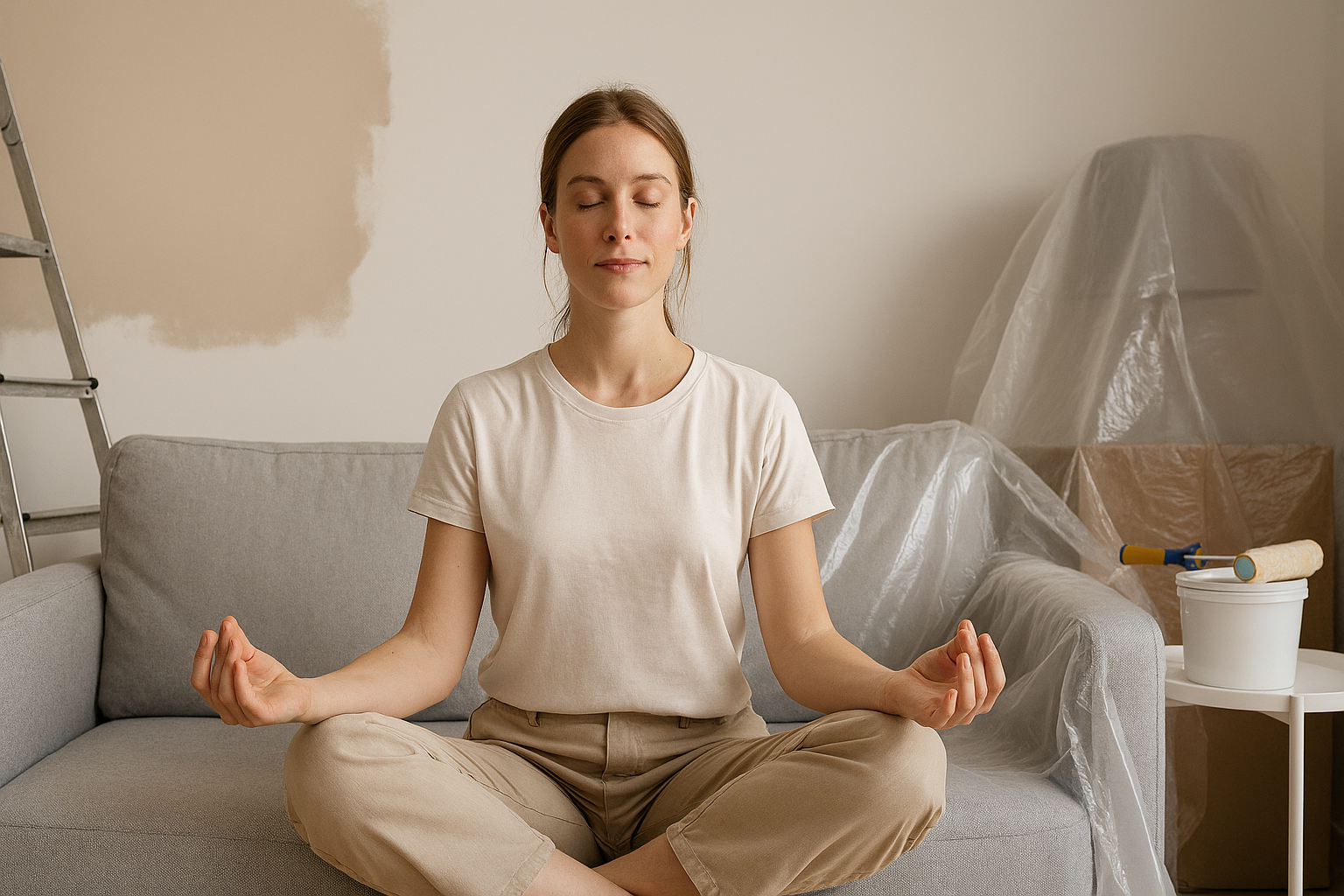
Inner peace is often treated like a destination—some quiet place you reach once life slows down, problems resolve, or clarity magically appears. But for most people, life doesn’t slow. It accelerates. Responsibilities multiply. Noise increases. And waiting for calm becomes its own source of stress.
This is where Inner Peace From Structure reframes everything.
Peace isn’t something you find when the world finally cooperates; it’s something you build when it doesn’t. It emerges from rhythms you can rely on, inner agreements you keep, and systems that support you when motivation fades. Structure, far from being restrictive, becomes the architecture that holds your calm steady under pressure.
When your days have intentional anchors, your values have order, and your inner world knows what to expect from you, anxiety loosens its grip. Decision fatigue fades. Emotional volatility softens. Structure doesn’t harden you—it stabilizes you.
We will explore how deliberate frameworks—silence, clarity, strength, and gratitude—work together to create a calm that is earned, portable, and resilient. Not peace as escape, but peace as alignment. Not peace as luck, but peace as design.
What We Will Cover
You will discover:
- Why structure is a psychological anchor, not a restriction
- How predictable rituals lower inner noise and decision fatigue
- The difference between forced discipline and supportive structure
- Four structured pathways that reliably cultivate inner peace
Overview
- Silence as a daily structural reset
- Clarity through intentional inner ordering
- Strength-based calm, not passive peace
- Gratitude practiced as a stabilizing system
Silence Ritual: Structure That Clears the Mind
Silence becomes powerful the moment it stops being accidental.
Most people experience quiet only when life temporarily loosens its grip—late at night, during exhaustion, or in fleeting pauses between obligations. That kind of silence is fragile. A Silence ritual, by contrast, is structured quiet: chosen, protected, and repeated. And that structure is precisely what allows calm to take root.
When silence is intentionally placed into the day—at the same time, in the same way—it signals safety to the nervous system. There is no decision to make, no negotiation with distraction. The mind doesn’t wonder if it will get relief; it knows when. This predictability alone reduces internal tension. Structure removes the background anxiety of waiting for calm and replaces it with trust.
A Silence ritual is not about “emptying the mind.” That expectation often creates frustration. Instead, it creates a container—a defined boundary where noise is allowed to settle without being chased or judged. Thoughts can rise and fall because there is no urgency to act on them. Over time, the mind learns that it doesn’t need to stay loud to stay relevant.
This is where Inner Peace From Structure becomes tangible. Silence held within a ritual stops being passive and starts becoming restorative. The body recognizes the pattern: this is the moment when nothing is required of me. Heart rate softens. Breathing deepens. The mental static that accumulates from constant stimulation begins to discharge.
Crucially, the ritual itself does the heavy lifting—not willpower. You don’t need to “feel calm” going into silence. You only need to show up to the structure. The repetition builds trust, and trust builds peace. This is why even short periods of consistent silence often outperform long, irregular attempts at meditation or reflection.
Over time, the Silence ritual becomes an internal reference point. When life feels chaotic, your system remembers that stillness exists—and that it’s accessible. Calm stops being a mood and becomes a skill, reinforced by structure.
Silence, when structured, is no longer an escape from life.
It becomes a reset that travels with you.
Soul‑Level Clarity: Order Beneath the Thoughts
Most inner unrest doesn’t come from too many thoughts—it comes from unclear orientation.
When values, priorities, and identity are loosely defined, the mind works overtime trying to decide who you are supposed to be in every moment. That constant inner negotiation creates friction. Soul‑level clarity is what happens when structure moves beneath the surface—past schedules and habits—and organizes meaning itself.
This kind of clarity is not about having all the answers. It’s about having an inner hierarchy. When you know what matters most, what matters next, and what can wait, the mind quiets naturally. Decisions become lighter. Emotional reactions lose their urgency. Peace emerges not because life is simple, but because your inner order is.
Structure at the soul level answers three stabilizing questions:
- What do I stand for?
- What season am I in?
- What deserves my energy right now?
Without these answers, even good opportunities feel overwhelming. With them, complexity becomes manageable.
This is where Inner Peace From Structure deepens. Soul‑level clarity removes the internal tug‑of‑war between competing identities—the part of you that wants rest versus the part that wants growth, the part that seeks safety versus the part that craves expansion. Structure doesn’t eliminate these voices; it organizes them. It gives each impulse a place instead of letting them fight for control.
When meaning is structured, emotions follow suit. Anxiety often fades not because circumstances change, but because the self is no longer confused about its direction. Clarity creates emotional gravity—you stop being pulled in every direction because something within you is anchored.
Importantly, soul‑level clarity is not rigid ideology. It’s a living framework. As life evolves, the structure adapts—but the presence of structure itself remains. This consistency is what builds trust with yourself. And self‑trust is one of the quietest, strongest forms of peace.
When your inner world knows what it is organized around, it no longer needs to stay loud to protect you.
The noise softens.
The signal sharpens.
And calm becomes the natural byproduct of inner order.
Warrior Peace: Calm That Comes from Strength
Peace is often misunderstood as the absence of tension.
Warrior peace is something very different.
It is the calm that comes from knowing you are capable—capable of holding pressure, making hard decisions, and staying grounded when circumstances demand more of you. This form of peace is not passive or fragile. It is earned through structure, and it endures precisely because it is built on strength.
Where unstructured calm collapses under stress, warrior peace stabilizes. The difference lies in preparation. When your inner world is supported by clear standards, routines, and self‑discipline, chaos no longer feels like a threat—it becomes a test you know how to meet. Structure turns unpredictability into something familiar, and familiarity reduces fear.
This is a core expression of Inner Peace From Structure. The warrior does not wait to feel calm before acting; calm emerges because action is guided. Boundaries are defined. Priorities are set. Energy is conserved instead of scattered. As a result, the nervous system doesn’t need to stay hyper‑vigilant—it trusts the framework you’ve built.
Warrior peace also resolves a common inner contradiction: the belief that strength requires constant force. In reality, true strength is economical. Structured discipline eliminates unnecessary struggle. You stop reacting to everything because you no longer have to prove anything to yourself. Confidence grows quietly, and with it, a steady internal stillness.
Importantly, this peace is not emotional suppression. Warrior peace allows emotions to move through you without knocking you off center. You can feel intensity without becoming volatile, urgency without panic, pressure without collapse. Structure acts as an internal spine—flexible, but unbreakable.
Over time, this kind of peace becomes visible. Your presence changes. Decisions feel cleaner. You move with fewer words and more certainty. Others may describe you as “calm under pressure,” but the truth is simpler: you are organized on the inside.
Warrior peace is not the calm of retreat.
It is the calm of readiness.
Gratitude as Confidence: A Structured Emotional Practice
Gratitude is often treated as a feeling.
But when left to emotion alone, it’s inconsistent—and unreliable.
Gratitude as confidence emerges when appreciation is structured, not spontaneous. It becomes a repeatable emotional practice that stabilizes self‑perception and reinforces inner trust. Instead of waiting to feel thankful, you build a system that reminds you—daily—of your own competence, progress, and resilience.
Unstructured gratitude tends to orbit circumstances: I’m grateful when things go well. Structured gratitude orbits identity: I recognize what I’ve earned, handled, and become. That shift changes everything. Confidence stops depending on external validation and starts being sourced internally.
This is a refined expression of Inner Peace From Structure. When gratitude is ritualized—written, spoken, or reflected on in a consistent format—it anchors the nervous system. You stop scanning for what’s missing and start reinforcing what’s already solid. The mind quiets because it no longer feels the need to defend your worth.
Gratitude as confidence also corrects a subtle psychological imbalance. High‑functioning individuals often track gaps more easily than gains. Structure counteracts this bias. By intentionally naming what you’ve completed, endured, or learned, you build emotional evidence. Confidence grows not from hype, but from proof.
Importantly, this practice is not about forced positivity. It does not deny difficulty. Instead, it reframes it: Even here, I am capable. That recognition produces calm. When you trust your ability to respond to life, uncertainty loses its edge.
Over time, structured gratitude creates emotional consistency. You become less reactive, less self‑doubting, less dependent on reassurance. Peace emerges because your inner narrative is no longer volatile—it’s reinforced daily.
Gratitude, when practiced with structure, is no longer a soft sentiment.
It becomes quiet authority—the confidence of someone who knows what they can stand on.
Practical Steps: How to Implement These Structures in Daily Life
Inner peace becomes sustainable only when structure moves from idea to practice. The goal is not to overhaul your life, but to install small, repeatable systems that your nervous system can learn to trust. Below are practical, realistic ways to implement each structure without adding pressure or complexity.
1. Build a Silence Ritual You Can Keep
Start by choosing when silence will happen, not how long it “should” last.
- Pick a fixed anchor: waking up, mid‑day reset, or evening wind‑down
- Begin with 3–5 minutes—short enough to remove resistance
- Remove one input only (sound, screen, or conversation) rather than trying to eliminate everything
- Sit, stand, or walk—posture matters less than consistency
The key is repetition. A short Silence ritual practiced daily is far more regulating than occasional long sessions. Over time, your system will associate that moment with safety and release.
2. Create Soul‑Level Clarity Through Weekly Orientation
Clarity doesn’t require constant reflection—it requires regular alignment.
Once a week, write or think through:
- One value that will guide your decisions this week
- One priority that deserves focused energy
- One thing that can wait without guilt
This simple structure prevents internal overload. When your week has a clear orientation, daily decisions become lighter, and emotional friction decreases naturally.
3. Strengthen Warrior Peace With Non‑Negotiables
Warrior peace grows from knowing where you stand.
Choose one or two non‑negotiables—small actions or boundaries you keep regardless of mood:
- A consistent wake‑up or shutdown time
- A daily movement or grounding practice
- A clear boundary around energy drains (people, screens, or obligations)
These non‑negotiables create internal stability. You stop asking, “Should I?” and start moving with quiet certainty. Calm follows structure.
4. Practice Gratitude as Confidence—With Proof
Shift gratitude from a feeling into a daily audit of capability.
At the end of the day, name:
- One thing you handled well
- One decision you stood by
- One challenge you didn’t avoid
Write it, say it, or reflect on it—but keep the format consistent. This builds emotional evidence. Confidence grows because you are reinforcing what you can rely on in yourself, not what went perfectly.
How to Make It All Sustainable
- Start with one structure, not all four
- Keep it boring enough to maintain
- Let consistency matter more than intensity
- Adjust the structure, not your commitment, when life changes
Structure is not about control—it’s about support. When your inner world knows it has systems to lean on, peace stops being fragile. It becomes part of how you live.
Build the structure first.
Let calm arrive as the result.
Here is a revised version of the “Practical Steps”, now enriched with concrete examples and short anecdotes to make each structure feel lived‑in, relatable, and actionable—without breaking your calm, editorial tone.
Practical Steps: How to Implement These Structures (With Real Examples)
Inner peace becomes real when structure meets daily life—not ideal life. The practices below are intentionally simple, because calm is built through repetition, not intensity. Each step includes a grounded example to show how these structures look in practice.
1. Silence Ritual: Make Quiet Predictable, Not Perfect
How to implement:
Choose a consistent moment in your day where silence happens automatically—no decision required.
Example:
One reader placed her Silence ritual immediately after parking her car at home. Before unlocking the door, she sat for three minutes—no phone, no music. At first, her thoughts raced. Within a week, her shoulders dropped the moment the engine turned off. The silence became a threshold: work ends here.
Why it works:
The ritual wasn’t long or “deep.” It was reliable. Her nervous system learned that quiet was coming—every day, without negotiation.
2. Soul‑Level Clarity: Reduce Inner Noise With Orientation
How to implement:
Once a week, write three sentences:
- This week, what matters most is…
- What can wait without guilt is…
- Who I am practicing being is…
Example:
A client who felt constant low‑grade anxiety realized his stress wasn’t workload—it was identity confusion. Some days he tried to be hyper‑productive; others he craved rest and creativity. After defining his weekly “identity focus” (builder, learner, or restorer), his inner debate quieted. He stopped asking, “Am I doing enough?” and started asking, “Am I aligned?”
Why it works:
Clarity removes internal competition. When the soul knows its direction, the mind stops shouting.
3. Warrior Peace: Install One Non‑Negotiable Anchor
How to implement:
Choose one action or boundary you keep regardless of mood. Not five. One.
Example:
A high‑performing executive chose a single non‑negotiable: no email before movement. Even on chaotic mornings, she walked for ten minutes before opening her inbox. Over time, her reactivity dropped. Meetings felt less charged. She wasn’t calmer because life got easier—she was calmer because she stayed in command of her first move.
Why it works:
Warrior peace is not emotional suppression—it’s preparedness. One steady anchor creates internal authority.
4. Gratitude as Confidence: Track Proof, Not Positivity
How to implement:
End each day by completing this sentence:
- Today, I trust myself more because I…
Example:
One man struggled with chronic self‑doubt despite external success. His nightly entries weren’t dramatic—“I had a hard conversation,” “I didn’t quit when I wanted to,” “I rested without guilt.” After two weeks, his internal tone shifted. He stopped rehearsing failures and started remembering competence.
Why it works:
Confidence grows from evidence. Structured gratitude trains the mind to recognize stability instead of scanning for flaws.
How to Keep These Practices Sustainable
- Start with one structure, not all four
- Make it boring enough to repeat
- Attach it to something already happening (parking, waking, closing a laptop)
- Adjust the format when life changes—never abandon the practice
Structure is not about control.
It’s about giving your inner world something it can rely on.
When that trust is built, peace no longer feels fragile.
It becomes familiar.
Common Challenges—and How to Work With Them (Not Against Them)
Building inner peace through structure sounds grounded in theory—but in practice, resistance often shows up quietly. Not as failure, but as friction. The goal isn’t to eliminate these challenges; it’s to recognize them early and respond with structure rather than self‑judgment.
Below are the most common obstacles—and the precise adjustments that keep the system working.
“I Keep Forgetting or Skipping the Practices”
What’s really happening:
The structure is competing with too many decisions.
Solution:
Attach each practice to something already automatic.
- Silence happens after parking the car
- Gratitude happens after brushing teeth
- Clarity happens during a weekly calendar review
When structure rides on existing behavior, consistency stops relying on memory or motivation.
“I Don’t Feel Calm When I Do This”
What’s really happening:
You’re expecting peace as an immediate sensation instead of a long‑term signal.
Solution:
Shift the metric from how you feel to what you’re building.
Calm often arrives later—as reduced reactivity, faster emotional recovery, or quieter self‑talk. Structure works beneath the surface before it’s felt.
“I Start Strong, Then Life Disrupts Everything”
What’s really happening:
The structure is too rigid for real life.
Solution:
Downgrade the structure—never abandon it.
- Five minutes becomes two
- Writing becomes mental reflection
- Morning becomes evening
Peace is built through continuity, not perfection. A flexible structure survives stress; a rigid one breaks.
“This Feels Too Simple to Be Effective”
What’s really happening:
The mind equates complexity with value.
Solution:
Remember: the nervous system responds to predictability, not novelty.
Simple, repeatable inputs create safety. Safety creates calm. Calm compounds.
If it feels boring, it’s probably working.
“I’m Doing This for Others Better Than for Myself”
What’s really happening:
Self‑trust hasn’t fully formed yet.
Solution:
Use Gratitude as confidence to document self‑follow‑through daily—even in small ways.
Trust grows from evidence. Once self‑trust strengthens, consistency becomes natural instead of forced.
Reframe the Entire Process
If resistance appears, it’s not a signal to stop.
It’s a signal to simplify, stabilize, or re‑anchor.
Structure is not a test of discipline.
It’s a support system for your nervous system.
When challenges are expected—and designed for—peace stops being fragile.
It becomes resilient.
Quick Reference: Common Challenges & Simple Fixes
If you skip the practices…
→ Attach them to something automatic (parking, brushing teeth, closing your laptop).
If you don’t feel calm right away…
→ Measure progress by reduced reactivity, not instant serenity. Calm often shows up later.
If life disrupts your routine…
→ Shrink the structure, don’t abandon it. Two minutes still counts. Continuity matters.
If it feels too simple to work…
→ That’s the point. The nervous system responds to predictability, not complexity.
If you show up better for others than yourself…
→ Use Gratitude as confidence. Record daily proof that you followed through.
Remember:
Structure isn’t discipline—it’s support.
Peace grows where consistency replaces negotiation.
Conclusion: Calm Is Built, Not Found
Inner peace is not something you stumble upon once life finally settles. Life rarely does. What does change everything is the decision to stop outsourcing calm to circumstances and start engineering it from within.
This is the essence of Inner Peace From Structure—the understanding that peace emerges when your inner world is organized, supported, and trusted. Silence becomes a reliable reset instead of a rare escape. Clarity replaces inner conflict because your values are no longer competing for control. Strength produces calm because you are prepared, not brittle. Gratitude reinforces confidence because you are grounded in proof, not hope.
Together, these structures create something subtle but profound: emotional safety inside yourself. When your system knows what to expect from you, it no longer needs to stay on edge. The mind softens. The body settles. The noise quiets—not because life is easy, but because you are internally aligned.
Peace, then, is no longer a mood you chase.
It becomes a byproduct of how you live.
And once peace is built into your structure, it stops being fragile. It travels with you—into pressure, uncertainty, and growth—steady, earned, and unshakeable.
Call to Action
Choose one structure today—and make it small enough to keep.
Set a Silence ritual for five minutes. Clarify one value that will guide your decisions this week. Strengthen one boundary that protects your energy. Or practice Gratitude as confidence by writing down one thing you handled well today—no qualifiers, no minimization.
Do not aim for transformation. Aim for consistency.
Inner Peace From Structure doesn’t arrive through grand changes; it settles in through repeatable ones. When you keep one simple agreement with yourself, day after day, your inner world begins to trust you—and trust is where calm takes root.
Start building the structure your peace can stand on.
The calm will follow.