Introduction
Anti‑inflammatory eating isn’t a diet—it’s a declaration of self‑leadership. It’s the moment you choose clarity over chaos, steadiness over spikes, and long‑term vitality over short‑term convenience. When you approach food as a Whole‑food ritual, you’re not just reducing inflammation—you’re building Hormonal resilience, lowering internal friction, and creating a lifestyle where Stress reduction becomes automatic rather than aspirational.
This is nourishment that goes beyond macros.
This is Nourishment as devotion—a daily act of becoming someone who protects their energy, honors their body, and builds a future grounded in internal peace.
You’ll learn how anti‑inflammatory eating becomes a sustainable identity practice through:
- Whole‑food ritual
- Hormonal resilience
- Stress reduction
- Nourishment as devotion
We’ll cover:
- Anti‑inflammatory eating begins with a Whole‑food ritual
- Hormonal resilience is the hidden engine of inflammation control
- Stress reduction is a nutritional strategy, not just a mindset practice
- Nourishment as devotion transforms consistency into identity
Overview
- Whole‑food ritual: The foundation of anti‑inflammatory eating
- Hormonal resilience: The quiet regulator of inflammation
- Stress reduction: The missing nutritional strategy
- Nourishment as devotion: The identity that makes it sustainable
Whole‑Food Ritual: The Foundation of Anti‑Inflammatory Eating
Anti‑inflammatory eating doesn’t begin in the kitchen. It begins in the mindset you bring to the kitchen.
A Whole‑food ritual is the moment you shift from “What should I eat?” to “How do I want to feel?” It’s the practice of choosing foods that stabilize your energy, soothe your nervous system, and reduce the internal friction that inflammation feeds on. When you treat food as ritual instead of reaction, your body finally gets the consistency it’s been craving.
Why Whole‑Food Rituals Reduce Inflammation
Inflammation thrives in unpredictability—blood sugar spikes, processed oils, artificial additives, and meals eaten in a rush. Whole‑food rituals interrupt that cycle by creating a predictable rhythm your body can trust.
A ritualized approach to eating:
- Anchors your day with nutrient‑dense meals
- Reduces inflammatory triggers by default
- Supports gut health, which directly influences inflammatory pathways
- Creates steadiness in your mood, energy, and hormonal patterns
This isn’t about perfection.
It’s about pattern—a repeatable, stabilizing pattern that your body recognizes as safety.
What a Whole‑Food Ritual Looks Like in Real Life
It’s not complicated. It’s intentional.
- Starting your morning with hydration and a grounding meal instead of caffeine chaos
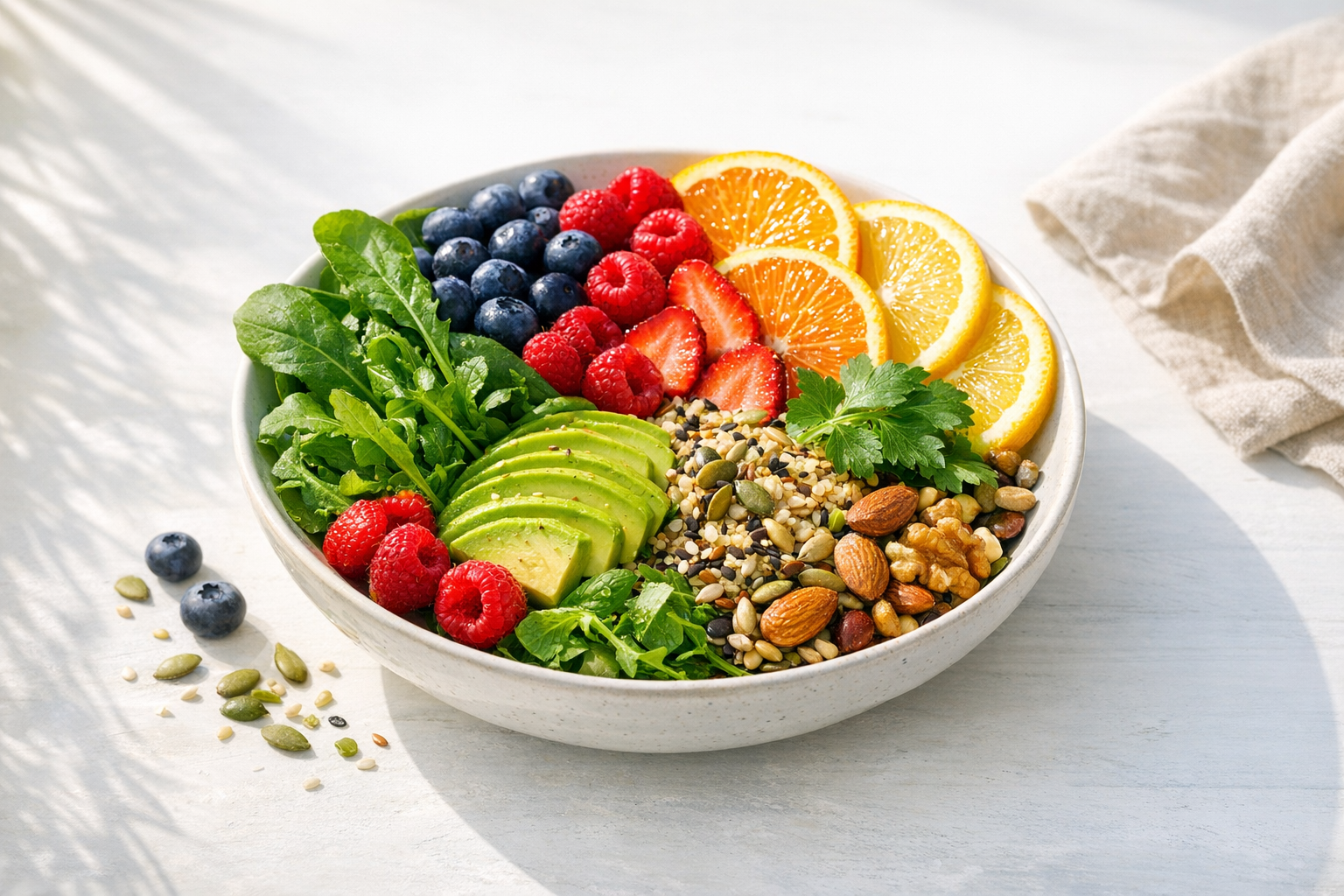
- Building plates around color, fiber, and clean proteins
- Choosing foods that come from the earth, not a factory
- Eating slowly enough for your nervous system to register nourishment
- Creating a predictable rhythm: breakfast → midday meal → evening meal
These micro‑choices compound into macro‑healing.
The Identity Shift Behind the Ritual
When you commit to a Whole‑food ritual, you’re not just reducing inflammation—you’re declaring:
“I am someone who protects my clarity.”
“I am someone who feeds my future, not my impulses.”
“I am someone who builds stability from the inside out.”
This is where anti‑inflammatory eating becomes identity work.
This is where the ritual becomes the lifestyle.
To deepen this transformation, the next step is understanding how your Whole‑food ritual directly builds Hormonal resilience—the quiet internal engine that determines how your body responds to stress, energy demands, and inflammation.
Hormonal Resilience: The Quiet Regulator of Inflammation
If Whole‑food ritual is the foundation, Hormonal resilience is the engine.
It’s the invisible system that determines how your body responds to stress, nourishment, sleep, and emotional load. Most people think inflammation is just about food, but the truth is deeper: your hormones decide whether your body stays inflamed or recovers.
When your hormones are balanced, your body becomes a place where healing is possible.
When they’re dysregulated, inflammation becomes your default setting.
Why Hormones Matter More Than People Realize
Hormones are chemical messengers, but they behave like architects. They design the internal environment you live in every day.
The key players in inflammation include:
- Cortisol — your stress hormone
- Insulin — your blood sugar regulator
- Estrogen & progesterone — your rhythm stabilizers
- Thyroid hormones — your metabolic thermostat
When these hormones are in harmony, inflammation stays low.
When they’re overwhelmed, inflammation spikes — even if you’re “eating healthy.”
This is why anti‑inflammatory eating is not just nutritional.
It’s hormonal self‑leadership.
How Anti‑Inflammatory Eating Builds Hormonal Resilience
Your Whole‑food ritual directly supports hormonal balance by:
- Reducing cortisol spikes through steady, predictable meals
- Improving insulin sensitivity with fiber‑rich, whole foods
- Supporting estrogen metabolism through cruciferous vegetables and phytonutrients
- Stabilizing thyroid function with minerals like iodine, selenium, and zinc
- Balancing hunger hormones (ghrelin and leptin) through nutrient density
This is the part most people miss:
Your hormones don’t need perfection — they need predictability.
Every time you choose a whole‑food meal over a processed one, you’re sending your hormones a message:
“You’re safe. You can regulate. You can rest.”
The Identity Shift Behind Hormonal Resilience
Hormonal resilience isn’t just a biological state — it’s an identity.
It’s the moment you stop living in reaction mode and start living in regulation mode.
It’s when you stop letting stress dictate your choices and start letting stability guide them.
When you build hormonal resilience, you become someone who:
- Doesn’t crash mid‑day
- Doesn’t spiral from stress
- Doesn’t feel inflamed after every meal
- Doesn’t rely on willpower to stay consistent
You become someone whose body supports their ambition instead of sabotaging it.
This is the quiet power of anti‑inflammatory eating.
It’s not loud.
It’s not dramatic.
It’s steady — and that steadiness changes everything.
To continue the journey, the next step is understanding how hormonal resilience and anti‑inflammatory eating work together to create Stress reduction — the missing nutritional strategy most people overlook.
Stress Reduction: The Missing Nutritional Strategy
Most people think stress lives only in the mind.
But stress is also biochemical.
It’s hormonal.
It’s inflammatory.
And this is where anti‑inflammatory eating becomes revolutionary:
It doesn’t just soothe your body — it interrupts the stress‑inflammation loop that keeps so many people stuck in survival mode.
Stress reduction isn’t just meditation, breathwork, or journaling.
It’s also the food you choose, the rhythm you keep, and the way you nourish your nervous system from the inside out.
The Stress–Inflammation Loop (and Why It Matters)
Here’s the cycle most people are trapped in:
- Stress spikes cortisol
- Cortisol destabilizes blood sugar
- Blood sugar swings trigger inflammation
- Inflammation increases cortisol
- Repeat
This loop is why you can “eat clean” and still feel inflamed.
It’s why you can “manage stress” and still feel exhausted.
It’s why your body feels like it’s working against you.
Anti‑inflammatory eating breaks this loop by giving your body the one thing stress steals: stability.
How Anti‑Inflammatory Eating Reduces Stress (Biologically, Not Just Emotionally)
When you nourish your body with whole, steady, predictable meals, you create internal conditions that make stress easier to regulate.
Anti‑inflammatory eating supports stress reduction by:
- Stabilizing blood sugar, which prevents emotional volatility
- Reducing inflammatory cytokines, which heighten anxiety and tension
- Supporting gut health, which influences serotonin and mood regulation
- Providing steady energy, reducing overwhelm and decision fatigue
- Lowering cortisol, because your body no longer feels under threat
This is stress reduction at the cellular level.
This is nervous system regulation through nourishment.
What Stress‑Reducing Eating Looks Like in Real Life
It’s not complicated. It’s consistent.
- Eating before you’re starving
- Choosing meals that keep your glucose steady
- Avoiding inflammatory oils that trigger internal stress responses
- Prioritizing fiber, protein, and healthy fats
- Eating in a calm environment, not in chaos or rush
These aren’t just habits — they’re signals to your nervous system that you are safe.
The Identity Shift Behind Stress Reduction
When you nourish yourself in a way that reduces stress, you become someone who:
- Doesn’t spiral when life gets loud
- Doesn’t rely on caffeine to function
- Doesn’t crash mid‑day
- Doesn’t feel inflamed after every meal
- Doesn’t live in survival mode
You become someone who leads with steadiness.
Someone whose body supports their ambition.
Someone who is no longer ruled by stress, but guided by clarity.
This is where anti‑inflammatory eating becomes emotional mastery.
This is where nourishment becomes nervous system leadership.
To complete the transformation, the next step is understanding how stress reduction and anti‑inflammatory eating evolve into Nourishment as devotion — the identity shift that makes consistency effortless and healing inevitable.
Nourishment as Devotion: The Identity That Makes Healing Inevitable
Anti‑inflammatory eating becomes effortless the moment it stops being a task and becomes a truth about who you are.
Nourishment as devotion is the shift from “I should eat better” to “I honor myself through what I choose.” It’s the moment you stop negotiating with your body and start partnering with it. It’s the moment food becomes a form of self‑respect rather than self‑management.
This is the identity that makes consistency natural.
This is the mindset that makes healing inevitable.
Why Devotion Changes Everything
Most people fail at anti‑inflammatory eating because they approach it like a temporary fix — a reset, a challenge, a phase. But devotion is different. Devotion is long‑term. Devotion is identity. Devotion is a relationship.
When you treat nourishment as devotion, you’re no longer chasing discipline.
You’re practicing alignment.
Devotion means:
- You feed yourself like someone you value
- You choose foods that protect your clarity
- You prioritize rituals that support your future self
- You stop abandoning your body when life gets loud
Inflammation loses its power when devotion becomes your default.
The Emotional Architecture of Devoted Eating
Devotion is not about restriction.
It’s about reverence.
It’s the quiet moment you choose a whole‑food meal because you want to feel grounded, not because you’re “supposed to.”
It’s the decision to eat slowly because you want your nervous system to feel safe.
It’s the choice to nourish yourself even on the days you feel overwhelmed, tired, or tempted to disconnect.
Devotion is the antidote to self‑abandonment.
It’s the return to self‑leadership.
What Nourishment as Devotion Looks Like in Real Life
It’s not dramatic. It’s intentional.
- Preparing meals that support your clarity
- Eating in a calm environment instead of in chaos
- Choosing foods that reduce inflammation instead of feeding it
- Honoring hunger cues instead of ignoring them
- Ending the day with a grounding meal instead of a numbing one
These choices build a body that feels safe, steady, and supported.
The Identity Shift Behind Devotion
When nourishment becomes devotion, you become someone who:
- Protects their energy
- Honors their body’s signals
- Chooses stability over impulse
- Builds rituals that reinforce their identity
- Lives in alignment with their future, not their cravings
You become someone who doesn’t need motivation — because devotion is stronger than motivation.
This is the moment anti‑inflammatory eating becomes a lifestyle.
This is the moment healing becomes your baseline.
This is the moment you become the kind of person who thrives.
To complete the loop and reinforce the foundation of this identity, the next internal link brings the reader back to the beginning: Whole‑food ritual — the daily practice that anchors everything you’ve built.
Common Obstacles & Solutions: How Real People Break the Cycle
Even with the best intentions, anti‑inflammatory eating can feel challenging. Not because the principles are complicated, but because life is. Stress, schedules, cravings, and old habits all compete for attention. This section helps your reader feel seen — and gives them practical, identity‑anchored solutions that make the lifestyle sustainable.
Obstacle 1: “I don’t have time to eat this way.”
The Truth:
Most people don’t lack time — they lack rhythm. Inflammation thrives in chaos, and chaos often comes from unplanned meals.
Solution:
Build a Whole‑food ritual that fits your life, not someone else’s.
Example:
Janelle, a busy nurse, used to skip breakfast and grab vending‑machine snacks during her shift. Her inflammation markers were high, and she felt constantly drained.
She didn’t overhaul her diet — she created a ritual:
- Overnight oats prepped the night before
- A protein‑rich snack in her bag
- A simple “color + protein + fiber” rule for lunch
Within two weeks, her energy stabilized — not because she had more time, but because she had more rhythm.
Daily Application:
- Prep one grounding meal the night before
- Keep a “stability snack” (nuts, fruit, protein bar) in your bag
- Choose meals with three anchors: color, protein, fiber
Obstacle 2: “I crave comfort foods when I’m stressed.”
The Truth:
This isn’t a lack of discipline — it’s biology. When cortisol spikes, your body seeks quick glucose. This is why Hormonal resilience matters.
Solution:
Stabilize your hormones before stress hits.
Example:
Marcus, a project manager, noticed he always craved sugar at 3 PM. Instead of fighting the craving, he addressed the cause:
- A protein‑rich breakfast
- A fiber‑dense lunch
- A 2 PM “reset snack” (apple + almond butter)
His cravings dropped by 70% because his hormones were no longer swinging wildly.
Daily Application:
- Eat before you’re starving
- Pair carbs with protein to prevent spikes
- Add a mid‑afternoon stabilizer snack
Obstacle 3: “I eat well, but stress still wrecks me.”
The Truth:
Stress is inflammatory. Even the cleanest diet can’t outpace a dysregulated nervous system. This is where Stress reduction becomes a nutritional strategy.
Solution:
Use food to regulate your nervous system.
Example:
Alicia, a grad student, ate clean but felt inflamed and anxious. Her breakthrough came when she changed how she ate:
- She stopped eating in the car
- She took 3 slow breaths before meals
- She ate without her phone
Her digestion improved, her anxiety softened, and her inflammation markers dropped — not because she changed the food, but because she changed the environment.
Daily Application:
- Eat sitting down, not rushing
- Take 3 grounding breaths before meals
- Put your phone away while eating
- Add magnesium‑rich foods (greens, seeds, legumes)
Obstacle 4: “I fall off track when life gets busy.”
The Truth:
This happens when eating is treated as a task instead of an identity. Consistency becomes fragile when it’s built on motivation instead of meaning. This is where Nourishment as devotion becomes the anchor.
Solution:
Shift from discipline to devotion.
Example:
Reggie, a rideshare driver with long hours, used to swing between clean eating and fast food. His turning point came when he reframed nourishment as an act of self‑respect.
He started asking himself:
“Does this meal support the version of me I’m becoming?”
That one question changed everything.
He began packing simple meals, choosing anti‑inflammatory snacks, and eating with intention — not perfection.
Daily Application:
- Ask: “Is this choice aligned with my future self?”
- Keep grounding foods in your car or bag
- Build one non‑negotiable ritual (morning hydration, evening meal, etc.)
Obstacle 5: “I don’t know where to start.”
The Truth:
Inflammation feels overwhelming when you try to fix everything at once.
Solution:
Start with one identity‑anchored shift.
Example:
Sara didn’t overhaul her diet. She started with one rule:
“Every meal must include something that grew from the earth.”
That one shift led to:
- More fiber
- More micronutrients
- Fewer processed foods
- Better digestion
- Lower inflammation
Momentum came naturally.
Daily Application:
- Add one whole‑food to every meal
- Replace one processed item with a whole‑food alternative
- Build one ritual at a time
To reinforce the foundation and help readers take their next step, guide them back to the beginning of the cycle: Whole‑food ritual — the anchor that makes every obstacle easier to overcome.
Conclusion — Anti‑Inflammatory Eating as a Return to Yourself
Anti‑inflammatory eating isn’t just a nutritional choice — it’s a reclamation.
A return.
A remembering.
It’s the moment you stop treating your body like an afterthought and start treating it like a partner. It’s the moment you stop surviving your days and start shaping them. It’s the moment you realize that healing isn’t something you chase — it’s something you practice.
Every Whole‑food ritual you build…
Every moment of Hormonal resilience you protect…
Every act of Stress reduction you choose…
Every expression of Nourishment as devotion you embody…
…is a vote for the version of you who is steady, clear, grounded, and powerful.
This lifestyle isn’t about perfection.
It’s about alignment.
It’s about choosing the path that brings you back to yourself — again and again — even when life gets loud.
Because the truth is simple:
Inflammation thrives in disconnection.
Healing thrives in devotion.
When you eat in a way that honors your body, you’re not just reducing inflammation — you’re building a life where clarity is normal, energy is stable, and self‑respect is woven into every choice you make.
This is the work that changes you.
This is the work that lasts.
This is the work that becomes who you are.
And it all begins with one small, intentional step — one ritual, one meal, one moment of devotion — repeated until your body recognizes it as home.
Your next step is already waiting for you.
Your future self is already thanking you.
And your healing begins the moment you decide to begin.
Call to Action — Begin Your Anti‑Inflammatory Ritual Today
You don’t need a perfect plan.
You don’t need a full kitchen overhaul.
You don’t need to wait for Monday, or motivation, or the “right time.”
You just need one devoted step.
Choose one Whole‑food ritual today — one grounding action that tells your body,
“I’m with you. I’m listening. I’m leading.”
Maybe it’s a colorful plate.
Maybe it’s a slow, intentional meal.
Maybe it’s a stabilizing snack instead of a stress‑driven one.
Maybe it’s three deep breaths before you eat.
Whatever it is, let it be small enough to do now and meaningful enough to shift your identity.
Because the moment you take that step, you’re no longer someone who wants to reduce inflammation — you’re someone who is reducing it.
You’re no longer someone who hopes for clarity — you’re someone who creates it.
You’re no longer someone waiting for healing — you’re someone practicing it.
Your body is ready.
Your future self is ready.
Your next chapter is ready.
Begin your anti‑inflammatory ritual today — and let this be the moment you return to yourself.
And when you do, share your experience in the comments and come back often — we’re building this journey together, one devoted choice at a time.