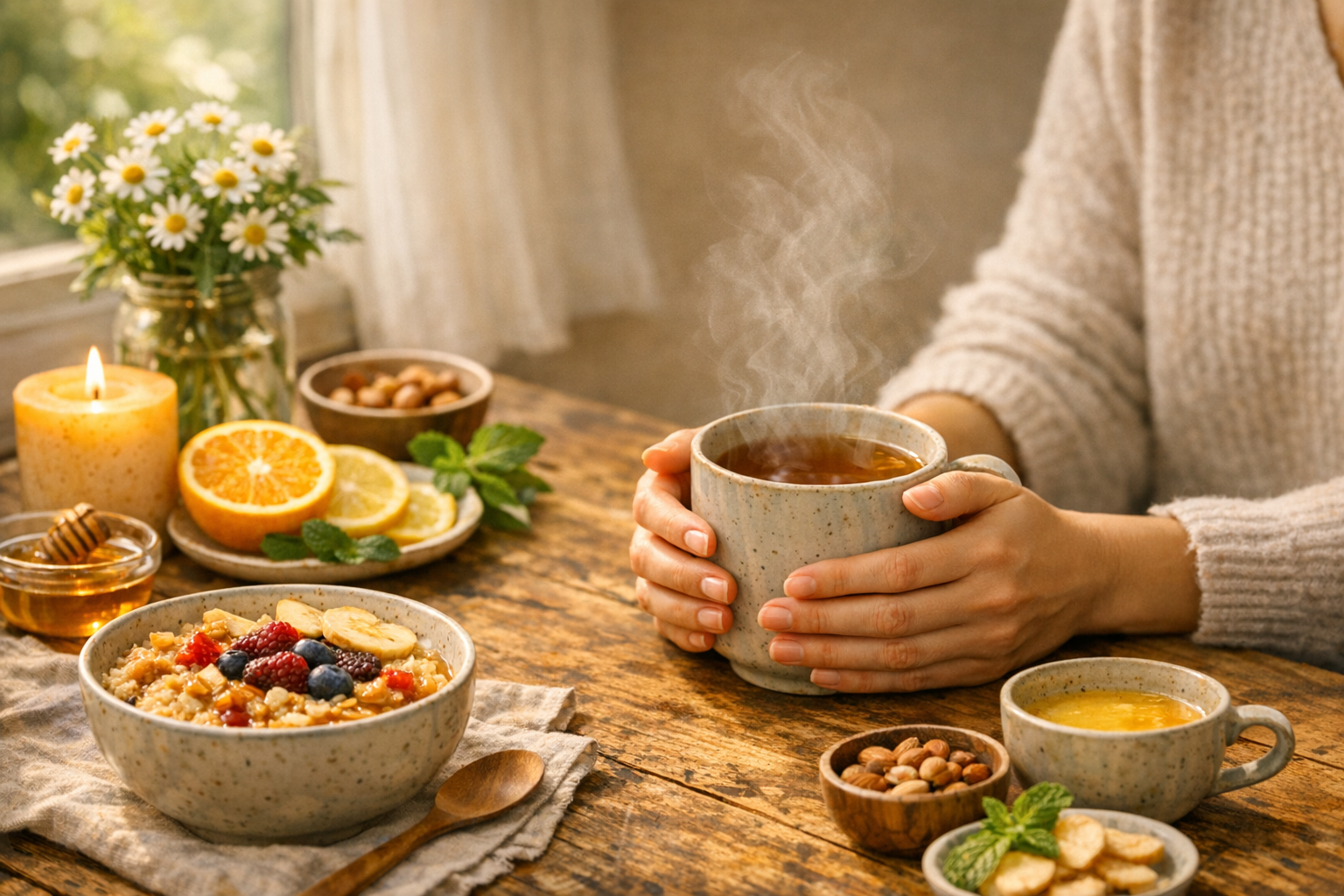
Introduction — Gut Health as a Daily Act of Self‑Leadership
Gut health isn’t just a wellness trend; it’s a quiet form of power. When your digestion is steady, your energy rises, your mood stabilizes, and your identity feels anchored. This post reframes gut health as a ritual of devotion—one that honors your body, your creativity, and your long‑term resilience. Through practices rooted in Gentle nourishment, Gratitude for body, Nourishment as devotion, and Creative nourishment, you build a system that supports you from the inside out.
This post explores four identity‑anchored pillars of gut health:
- Gentle nourishment — creating digestive calm through softness and simplicity
- Gratitude for body — shifting your relationship with your gut through appreciation
- Nourishment as devotion — treating every meal as a ritual of self‑respect
- Creative nourishment — using creativity to keep gut‑supportive eating enjoyable
These pillars work together to create a sustainable, emotionally resonant gut health routine.
Overview
- Gentle nourishment: Soften your system to strengthen your gut
- Gratitude for body: Build a supportive relationship with your gut
- Nourishment as devotion: Turn gut health into a ritual of identity
- Creative nourishment: Make gut‑supportive eating enjoyable
Gentle nourishment: Soften your system to strengthen your gut
Gut health begins with softness—not restriction, not intensity, not the pressure to “fix” yourself overnight. Gentle nourishment is the art of feeding your gut in a way that signals safety, steadiness, and calm. When your digestive system feels safe, it performs better. When it feels rushed, overwhelmed, or inflamed, it shuts down, tightens, or rebels.
Gentle nourishment is the opposite of forcing your body into compliance. It’s a conversation. A collaboration. A quiet agreement between you and your gut that says: I’m listening. I’m not here to punish you. I’m here to support you.
Why gentleness works physiologically
Your gut is deeply intertwined with your nervous system. When you slow down, chew intentionally, and choose foods that are warm, soft, and easy to digest, you reduce the stress signals that interfere with digestion.
- Warm meals relax the digestive tract
- Soft textures reduce digestive workload
- Slow eating activates the parasympathetic “rest and digest” state
- Consistent meal timing stabilizes gut motility
Gentleness isn’t weakness—it’s strategy.
How to practice gentle nourishment daily
- Start your morning with something warm: tea, broth, or a simple cooked breakfast
- Choose meals that feel grounding rather than chaotic
- Avoid multitasking while eating; let your body focus on digestion
- Notice how your gut responds to different textures and temperatures
- Give yourself permission to simplify—your gut thrives on simplicity
This is nourishment that respects your biology instead of fighting it.
The identity shift behind gentle nourishment
When you choose gentleness, you’re not just supporting your gut—you’re rewriting your relationship with your body. You’re saying:
I don’t need to earn my wellness through struggle. I can build it through care.
This shift is foundational. It sets the tone for every other gut‑supportive ritual you build.
What to read next
If gentle nourishment is the first step, the next step is learning to appreciate the body that receives it. Continue your journey with [Gratitude for body], where you’ll explore how emotional softness directly improves gut resilience.
Gratitude for body: Build a supportive relationship with your gut
Gut health isn’t only about what you eat — it’s about the relationship you have with the body that receives that nourishment. Gratitude for body is the emotional anchor that transforms gut care from a mechanical routine into a living partnership. When you shift from frustration to appreciation, your gut shifts with you.
Most people approach gut issues with tension:
Why is my stomach acting up? Why can’t my digestion just cooperate?
But your gut is not malfunctioning — it’s communicating. Gratitude helps you hear the message instead of fighting the messenger.
Why gratitude improves gut function
Your gut and your brain are in constant conversation through the vagus nerve. When you practice gratitude, you activate the parasympathetic nervous system — the same system responsible for digestion, repair, and calm.
- Gratitude lowers cortisol, reducing inflammation
- It softens the emotional “clench” that tightens the gut
- It increases vagal tone, improving motility and digestive flow
- It reframes symptoms as signals, not failures
Gratitude is not a mindset trick. It’s a physiological intervention.
How to practice gratitude for your gut
- Before eating, pause for one breath and acknowledge your gut’s work
- When discomfort arises, replace self‑criticism with curiosity
- Speak to your body the way you’d speak to someone you care about
- Keep a simple note in your phone: “What my gut did well today”
- Treat every symptom as information, not an inconvenience
This practice builds emotional safety — and your gut responds to safety.
The identity shift behind gratitude
When you practice gratitude for your body, you’re choosing partnership over punishment. You’re saying:
My body is not the enemy. My gut is not a problem to solve. We’re on the same team.
This shift dissolves the shame that often surrounds digestive struggles. It replaces urgency with patience, and self‑judgment with self‑leadership.
What to read next
Once gratitude becomes your foundation, the next evolution is turning nourishment into a ritual of identity. Continue with [Nourishment as devotion], where you’ll learn how to transform every meal into an act of alignment and self‑respect.
Nourishment as devotion: Turn gut health into a ritual of identity
There’s a moment in every wellness journey when food stops being fuel and starts becoming something deeper — a ritual, a declaration, a form of self‑respect. Nourishment as devotion is that moment. It’s the shift from “I should eat better” to “I deserve to feel supported.”
When you approach gut health through devotion, every meal becomes a quiet ceremony. Not dramatic. Not performative. Just intentional. You’re no longer eating to control your body — you’re eating to care for it. And that shift changes everything.
Why devotion transforms gut health
Devotion creates consistency. And consistency is what the gut responds to.
When you treat nourishment as a ritual:
- Your meals become calmer and more predictable
- Your nervous system relaxes before you even take a bite
- Your gut receives food in a state of safety rather than stress
- You naturally choose foods that support long‑term vitality
Devotion isn’t about perfection — it’s about presence.
How to practice nourishment as devotion
- Plate your meals with intention, even when eating alone
- Choose foods that honor your future self, not just your cravings
- Create a pre‑meal ritual: a breath, a pause, a grounding moment
- Let your kitchen become a space of care, not chaos
- Treat cooking as a conversation with your body
This is where gut health becomes a lifestyle instead of a task.
The identity shift behind devotional nourishment
When you nourish yourself with devotion, you’re saying.
I am someone who takes care of myself. I am someone who shows up for my body. I am someone who builds strength through softness.
This identity shift is powerful. It turns gut health into a reflection of who you are becoming — not just what you’re eating.
What to read next
Once nourishment becomes devotion, the next evolution is making it expressive and enjoyable. Continue with [Creative nourishment], where you’ll learn how to keep gut‑supportive eating vibrant, playful, and sustainable.
Creative nourishment: Make gut‑supportive eating enjoyable
Most people fail at gut‑healthy eating not because they lack discipline, but because they lack variety, pleasure, and creative expression. Creative nourishment solves that. It turns gut health from a rigid checklist into a living, evolving practice that feels playful instead of punishing.
When you bring creativity into your meals, you activate a different part of yourself — the part that enjoys color, texture, ritual, and experimentation. This is where gut health becomes sustainable. Not because you force yourself to stay consistent, but because you want to.
Why creativity matters for gut health
Your gut thrives on diversity — not just in nutrients, but in sensory experience.
Creative nourishment naturally supports this by encouraging:
- A wider range of Whole Foods
- More herbs, spices, and phytonutrients
- Meals that feel emotionally satisfying
- A sense of novelty that keeps you engaged
Creativity keeps your gut microbiome curious — and curiosity is fuel for resilience.
How to practice creative nourishment
- Rotate simple recipes with small twists: new herbs, new colors, new textures
- Build “color bowls” that make your plate visually inspiring
- Try one new gut‑friendly ingredient each week
- Use spices as both flavor and medicine
- Plate your meals like a small piece of art — not for perfection, but for pleasure
Creativity doesn’t require complexity. It requires presence.
The identity shift behind creative nourishment
When you bring creativity into your meals, you’re saying:
I am someone who makes wellness enjoyable. I am someone who expresses myself through nourishment. I am someone who builds rituals that feel alive.
This identity shift is what keeps your gut health routine from becoming stale. It transforms eating into an act of self‑expression — not self‑restriction.
What to read next
Now that you’ve explored all four pillars, the next step is integrating them into a daily rhythm. Continue your journey with [Gentle nourishment] to revisit the foundation and begin building your full gut‑health ritual from the ground up.
Common Obstacles & Solutions (With Real‑Life Examples)
Even with the best intentions, gut‑health rituals can feel challenging. Not because you’re undisciplined — but because life is loud, fast, and unpredictable. These obstacles are normal. What matters is having strategies that meet you where you are.
Below are the most common barriers people face, along with grounded solutions and real‑life examples that show how to apply each concept in daily life.
Obstacle 1: “I don’t have time to eat gently.”
Modern life pushes you into rushed meals, standing bites, or eating while multitasking. Your gut feels every bit of that urgency.
Solution: Micro‑rituals of gentleness
You don’t need a 30‑minute mindful meal. You need a moment of softness.
- Take one grounding breath before your first bite
- Put your fork down once per meal
- Choose warm, simple meals when you’re overwhelmed
Example
Jordan, a rideshare driver, used to inhale breakfast between trips. His gut was always tight. He started a 10‑second ritual: sitting in his car, placing one hand on his stomach, and taking a single breath before eating. Within a week, his bloating decreased — not because he changed his food, but because he changed his pace.
Daily Application
Pair your gentle nourishment ritual with something you already do — like waiting for your coffee to brew or your food to heat. The habit becomes automatic.
Obstacle 2: “I get frustrated with my gut when symptoms show up.”
Bloating, discomfort, or irregularity can trigger self‑criticism. That emotional tension tightens the gut even more.
Solution: Gratitude as emotional regulation
Shift from judgment to partnership.
- Acknowledge your gut’s effort
- Reframe symptoms as signals
- Use gratitude to soften your nervous system
Example
A friend of mine, Maya, used to get angry every time her stomach felt off. One day she tried something different: instead of saying “Why is this happening,” she whispered, “Thank you for telling me something’s off.” That tiny shift reduced her stress response — and her symptoms eased faster.
Daily Application
Keep a simple note in your phone titled:“What my gut did well today.”
One sentence a day rewires your relationship with your body.
Obstacle 3: “I fall off track when life gets chaotic.”
When stress rises, devotion to nourishment often disappears.
Solution: Make nourishment a ritual, not a task
Rituals survive chaos because they’re identity‑based.
- Light a candle before dinner
- Plate your food intentionally
- Say a grounding phrase before eating
These cues anchor you even when your schedule doesn’t.
Example
During a stressful work season, Alex kept skipping meals or grabbing whatever was closest. He created a 30‑second ritual: placing his meal on a plate instead of eating from the container. That one act of devotion shifted his mindset — and he naturally began choosing foods that supported his gut.
Daily Application
Choose one devotional cue and repeat it daily. The cue becomes your anchor.
Obstacle 4: “Healthy eating feels boring.”
Repetition kills motivation. Your gut needs consistency, but your mind needs novelty.
Solution: Add creativity without complexity
- Rotate herbs and spices
- Change the color palette of your meals
- Try one new ingredient each week
- Plate your food in a way that feels expressive
Example
Sam hated “healthy food” until he started making color bowls — greens, oranges, purples, reds. Suddenly meals felt like art, not obligation. His gut improved because he was finally consistent.
Daily Application
Once a week, choose one meal to “upgrade” creatively — new spice, new color, new texture. Keep it playful.
Obstacle 5: “I don’t know where to start.”
Gut health can feel overwhelming when you try to change everything at once.
Solution: Start with the softest step
Begin with the pillar that feels easiest today:
- Gentle nourishment if you need calm
- Gratitude for body if you need emotional grounding
- Nourishment as devotion if you crave ritual
- Creative nourishment if you need joy
Example
A reader named Lila felt paralyzed by all the advice online. She chose one step: drinking something warm each morning. That single act softened her gut, lowered her stress, and gave her the confidence to add more rituals over time.
Daily Application
Pick one pillar and practice it for 3 days. Let momentum build naturally.
Obstacle 6: “I forget to stay consistent.”
Not because you don’t care — but because life is full.
Solution: Stack your gut rituals onto existing habits
- Gentle nourishment → pair with your morning beverage
- Gratitude for body → pair with washing your hands
- Nourishment as devotion → pair with plating your meal
- Creative nourishment → pair with grocery shopping
Example
A busy mom named Serena paired her gratitude ritual with brushing her teeth. Every night she whispered, “Thank you for carrying me today.” Her digestion improved because her nervous system softened.
Daily Application
Attach your gut ritual to something you already do without thinking.
Obstacle 7: “I feel alone in this journey.”
Gut struggles can feel isolating, especially when others don’t understand.
Solution: Build internal companionship
Your rituals become your support system.
- Your breath becomes your grounding
- Your gratitude becomes your reassurance
- Your devotion becomes your stability
- Your creativity becomes your joy
Example
When Daniel moved to a new city, his gut flared from stress. He used his rituals as a form of self‑companionship — a way to feel anchored even when everything else felt unfamiliar.
Daily Application
Let your rituals be your home base. They travel with you.
Internal‑Link Integration
To deepen your journey, revisit the four pillars that support these solutions:
- [Gentle nourishment]
- [Gratitude for body]
- [Nourishment as devotion]
- [Creative nourishment]
Each one offers a different doorway into gut health — choose the one your body is asking for today.
Conclusion — Gut Health as a Return to Yourself
Gut health isn’t just about digestion. It’s about coming home to your body. It’s about remembering that your well‑being is built from the inside out — through softness, gratitude, devotion, and creativity. These aren’t just practices; they’re forms of self‑leadership. They’re ways of saying, I am worth caring for. I am worth slowing down for. I am worth nourishing.
When you choose Gentle nourishment, you create safety.
When you practice Gratitude for body, you create partnership.
When you embrace Nourishment as devotion, you create identity.
When you explore Creative nourishment, you create joy.
Together, these pillars form a rhythm — a living ecosystem of rituals that support your gut, your energy, your mood, and your sense of self. They turn eating into a conversation with your future. They turn your body into a place you trust.
And the truth is: you don’t need to master everything at once. You only need to begin. One breath before a meal. One moment of gratitude. One intentional plate. One creative twist. One act of devotion. These small choices compound. They build momentum. They reshape your internal landscape.
Your gut is not asking for perfection. It’s asking for presence.
It’s asking for partnership.
It’s asking for you.
So let this be your invitation — not to overhaul your life, but to return to yourself. To build rituals that feel like home. To nourish your gut the way you nourish your dreams: gently, consistently, and with a sense of devotion that grows stronger every day.
Your gut is ready. Your body is listening.
And this journey — this quiet, powerful journey — is yours to claim.
Here is a warm, invitational, emotionally grounded call to action that fits the cinematic, identity‑anchored tone of your gut‑health post. It gently invites engagement, encourages reflection, and includes a specific question to spark comments.
Call to Action — Your Turn to Step Into This Ritual
You’ve just moved through four pillars, real‑life examples, and the quiet power of returning to your body. Now I want to hear from you. Your story, your rhythm, your rituals — they matter. They help someone else feel less alone. They remind another reader that healing doesn’t happen in isolation; it happens in community.
So take a moment. Breathe. Check in with yourself.
Then share something real.
What’s one small gut‑health ritual you’re ready to try — or one that already supports you. Maybe it’s a warm morning drink. Maybe it’s a moment of gratitude before a meal. Maybe it’s plating your food with intention, or adding a splash of color to your dinner. Whatever it is, your experience could be the spark that helps someone else begin.
Drop your answer in the comments.
Tell us what you’re exploring, what you’re learning, or what you’re reclaiming.
And if this post resonated with you, come back tomorrow — we’re building this journey together, one gentle ritual at a time.
Your gut is listening.
Your body is responding.
And your voice belongs here.