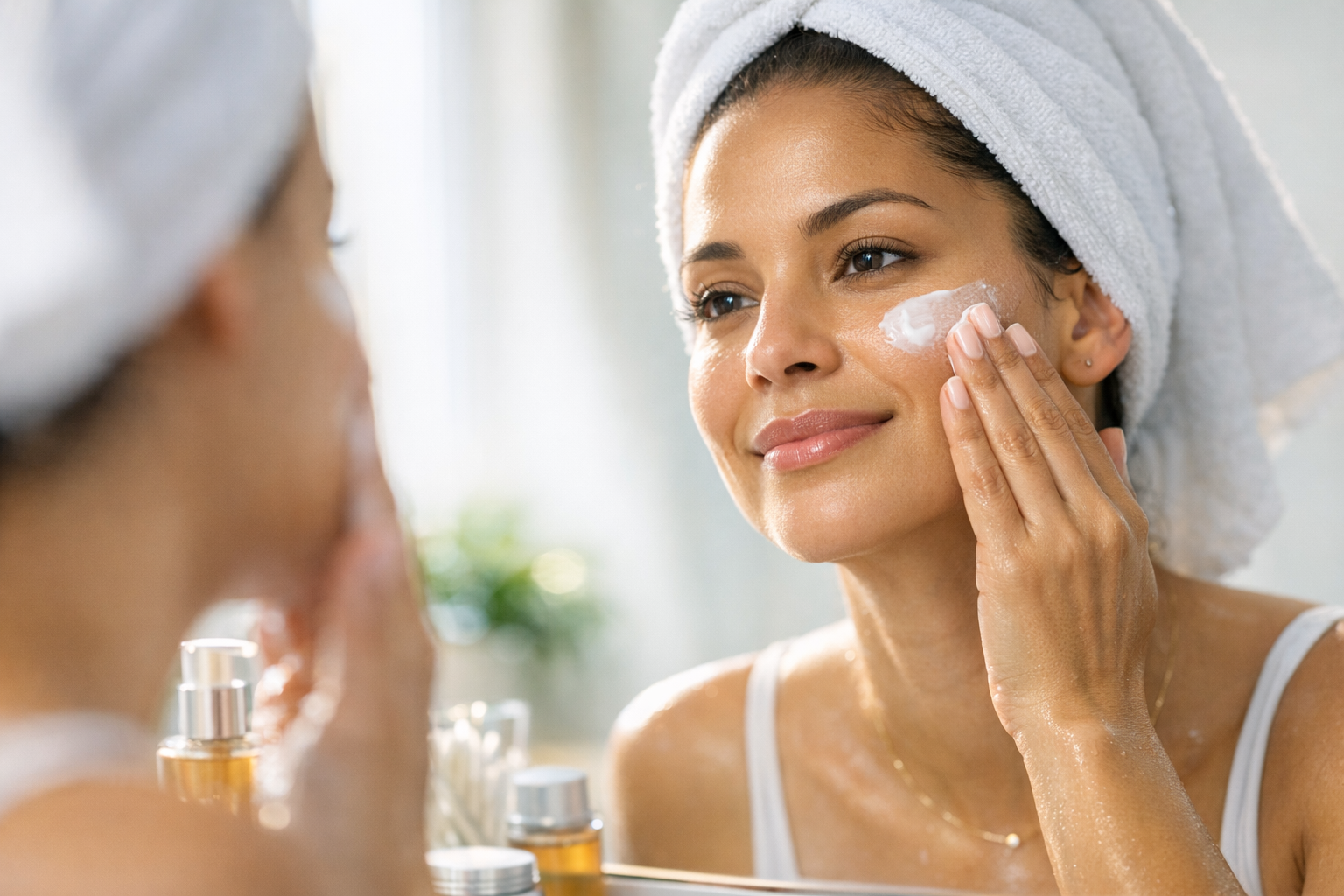
Introduction: Hygiene Discipline as a Mirror of Who You Are
Hygiene discipline isn’t about perfection—it’s about identity. Every time you choose order over chaos, clarity over neglect, and intention over autopilot, you reinforce the story you’re becoming. This ritual is where self‑respect becomes visible. It’s where your environment, your body, and your spirit align. Through clean tools, skin barrier repair, embodied faith, and creative embodiment, hygiene becomes a daily declaration of devotion.
This post explores how hygiene discipline strengthens your self‑image, stabilizes your energy, and deepens your connection to your body and spirit.
You’ll learn how small, consistent actions build a foundation of clarity, confidence, and inner leadership.
Overview
- Clean Tools as a Symbol of Self‑Respect
- Skin Barrier Repair as a Discipline of Care
- Embodied Faith: Hygiene as Spiritual Alignment
- Creative Embodiment: Turning Routine Into Ritual
- Order Creates Emotional Stability
- Consistency Builds Inner Leadership
- Your Environment Reflects Your Standards
Clean Tools as a Symbol of Self‑Respect
Hygiene discipline begins with the simplest, most revealing mirror of your standards: the tools you use every day. Your brushes, razors, washcloths, bottles, combs, and surfaces are not just objects—they are extensions of your identity. When they are clean, organized, and intentionally maintained, they send a message to your nervous system: I live in alignment with clarity, order, and self‑worth.
Clean tools create an environment where your body feels safe to soften, release, and receive care. There’s a psychological shift that happens when you reach for a brush that’s spotless instead of dusty, or a razor that’s sharp instead of neglected. You move differently. You breathe differently. You treat yourself differently. Cleanliness becomes a form of self‑leadership.
This discipline also eliminates micro‑stressors you don’t realize are draining you. A cluttered counter, a dirty mirror, or a sticky product bottle creates background noise that chips away at your emotional bandwidth. But when your tools are clean, your environment becomes a sanctuary—one that supports your energy instead of stealing from it.
Maintaining clean tools is not about being obsessive. It’s about being intentional. It’s about choosing to live in a space that reflects the identity you’re building, not the one you’re leaving behind. It’s a daily vote for clarity, order, and devotion.
And once your tools are clean, the next layer of hygiene discipline becomes even more powerful: caring for the body they touch. Continue your ritual by exploring Skin barrier repair—the next step in protecting your health, your glow, and your long‑term resilience.
Skin Barrier Repair as a Discipline of Care
Your skin barrier is the frontline of your physical resilience—your body’s shield, filter, and communicator. When it’s compromised, everything feels harder: your energy dips, your confidence wavers, your sensitivity increases, and your body works overtime to compensate. But when your skin barrier is nourished and protected, your entire system stabilizes. You feel grounded, clear, and capable.
This is why skin barrier repair is not just a beauty step—it’s a discipline of care. It’s a ritual that teaches you to prioritize long‑term health over short‑term convenience. Every time you choose gentle cleansing over stripping, hydration over harshness, and consistency over chaos, you reinforce a deeper message: I protect what protects me.
Repairing your skin barrier is also an act of emotional regulation. When your skin is inflamed, irritated, or stressed, your nervous system mirrors that agitation. But when your skin is soothed, nourished, and supported, your body receives a signal of safety. You move through your day with more ease. You feel more at home in yourself.
This discipline also builds patience. Skin barrier repair doesn’t offer instant gratification—it rewards devotion. It asks you to show up consistently, even when the results are subtle. It trains you to honor the slow, steady work of healing. And in that process, you strengthen your identity as someone who cares for themselves with intention, not urgency.
Most importantly, skin barrier repair deepens your relationship with your body. It invites you to listen, respond, and collaborate with your physical self instead of fighting it. It becomes a conversation—one where your body finally feels heard.
Once your skin is protected, the next layer of hygiene discipline becomes spiritual: aligning your physical care with your inner belief system. Continue your ritual by exploring Embodied faith—where hygiene becomes devotion, grounding, and identity in motion.
Embodied Faith: Hygiene as Spiritual Alignment
Hygiene discipline becomes transformative the moment it shifts from routine to reverence. This is where embodied faith enters—when your physical actions become a living expression of what you believe about yourself, your worth, and the life you’re building. It’s the moment hygiene stops being something you do and becomes something you practice.
Embodied faith is the understanding that your body is not separate from your spirit. The way you care for your skin, your space, your tools, and your environment is a reflection of your inner world. When you move with intention—washing your face slowly, cleansing your body with presence, tending to your skin with gentleness—you’re not just cleaning. You’re affirming: I am a vessel worthy of clarity, protection, and devotion.
This is why hygiene discipline is spiritual work. It grounds you. It centers you. It brings you back into your body when your mind is scattered or your emotions feel heavy. The act of cleansing becomes a reset, a recalibration, a quiet prayer in motion. You’re not just removing dirt—you’re releasing stagnation, stress, and the energetic residue of the day.
Embodied faith also strengthens your identity. When you show up for your body with consistency, you reinforce the belief that you are someone who honors themselves. You become someone who doesn’t wait for motivation, validation, or convenience to practice care. You act from devotion, not impulse. From alignment, not urgency.
And the beauty of embodied faith is that it naturally spills into the rest of your life. When you treat your body with reverence, you begin treating your goals, relationships, and environment with the same level of intention. Hygiene becomes a spiritual anchor—a ritual that keeps you connected to your highest self.
Now that your hygiene practice is rooted in faith and identity, the next evolution is expression. Continue your journey with Creative embodiment—where your hygiene ritual becomes art, presence, and a living declaration of who you are becoming.
Creative Embodiment: Turning Routine Into Ritual
Hygiene discipline becomes powerful the moment it stops being mechanical and starts becoming expressive. Creative embodiment is where your ritual comes alive—where your movements, your environment, and your presence transform ordinary hygiene into a form of artistry. This is the space where you stop rushing through your routine and start inhabiting it.
Creative embodiment is not about aesthetics for the sake of aesthetics. It’s about presence. It’s about letting your body participate in the ritual instead of treating hygiene like a checklist. When you move slowly, intentionally, and with awareness, you shift from doing hygiene to experiencing hygiene. Your breath deepens. Your shoulders drop. Your nervous system softens. You become fully here.
This is where identity becomes tactile.
The way you apply your moisturizer, the way you cleanse your face, the way you brush your hair—these small gestures become declarations of who you are becoming. You’re not just maintaining your body; you’re shaping your energy. You’re creating a moment where your inner world and outer world meet.
Creative embodiment also invites you to personalize your ritual.
Maybe you light a candle. Maybe you play a specific song. Maybe you move with a rhythm that feels grounding. Maybe you speak affirmations into the mirror. Whatever you choose, the ritual becomes yours—crafted, intentional, and infused with meaning.
This practice also strengthens your emotional resilience. When you allow your hygiene ritual to become expressive, it becomes a space where you can process, release, and reset. You’re not just cleaning your body—you’re clearing your energy. You’re giving yourself a moment of artistry in a world that constantly demands efficiency.
And the beauty of creative embodiment is that it elevates your entire hygiene discipline. It makes the ritual something you look forward to, something that nourishes you, something that reminds you of your own power and presence.
Now that your hygiene practice has become expressive and embodied, the next evolution is emotional stability—how order and discipline create inner calm. Continue your journey by exploring Order creates emotional stability, where your environment becomes a foundation for clarity, confidence, and grounded energy.
Order Creates Emotional Stability
Hygiene discipline isn’t just about cleanliness—it’s about creating an internal climate where your nervous system can finally exhale. Order is one of the most underestimated forms of emotional regulation. When your environment is chaotic, your mind mirrors that chaos. When your space is clean, structured, and intentional, your body interprets it as safety.
This is why order is not cosmetic—it’s neurological.
A cluttered counter, a messy sink, or a pile of unwashed tools sends micro‑signals of overwhelm. Your brain registers every unfinished task as a threat, every mess as a demand, every disorganized corner as something you’re “behind” on. Even if you don’t consciously notice it, your body does. It tightens. It braces. It stays on alert.
But when your hygiene space is orderly, your system softens.
Your breath deepens. Your shoulders drop. Your mind becomes quieter. You move through your routine with more clarity because your environment is supporting you instead of competing for your attention. Order becomes a stabilizing force—a quiet anchor that keeps you grounded.
This stability also strengthens your sense of self.
When you maintain order, you reinforce the identity of someone who follows through, someone who honors their space, someone who creates conditions that support their growth. You stop reacting to your environment and start shaping it. You become the leader of your space, not the victim of it.
And the beauty of order is that it compounds.
A clean sink makes it easier to wash your face.
A tidy counter makes it easier to moisturize with presence.
A well‑organized drawer makes it easier to maintain your tools.
Order removes friction, and when friction disappears, discipline becomes natural.
This emotional stability becomes the foundation for deeper self‑leadership. Once your environment supports your clarity, the next evolution is strengthening your ability to follow through—especially when motivation fades. Continue your journey by exploring Consistency builds inner leadership, where discipline becomes identity and your daily actions shape the person you’re becoming.
Common Obstacles & Solutions
Hygiene discipline sounds simple, but real life introduces friction—fatigue, stress, inconsistency, emotional dips, and the chaos of daily responsibilities. This section reframes those obstacles as opportunities to strengthen identity, deepen self‑respect, and build a ritual that supports your emotional and physical well‑being.
Below are the most common challenges people face, along with grounded, real‑world solutions and examples that show how to apply these concepts in daily life.
Obstacle 1: “I’m too tired at the end of the day.”
Solution: Shrink the ritual, not the standard.
When exhaustion hits, most people abandon the ritual entirely. But hygiene discipline isn’t about doing everything—it’s about doing something that reinforces your identity.
Example:
Jasmine, a night‑shift nurse, used to collapse into bed without washing her face. She felt guilty, overwhelmed, and disconnected from herself. So she created a “minimum ritual”: cleanse + moisturize. Two steps. No negotiation.
On nights when she had more energy, she added extras. But even on the hardest days, she honored the minimum.
Daily Application:
- Choose a 2‑step non‑negotiable routine.
- Place your products in a visible, easy‑to‑reach spot.
- Let the ritual be small but sacred.
This reinforces: I don’t abandon myself, even when I’m tired.
Obstacle 2: “My space gets messy again so fast.”
Solution: Build micro‑maintenance into the ritual.
Order creates emotional stability, but maintaining order requires rhythm, not perfection.
Example:
Marcus realized his bathroom counter became chaotic because he never put anything back. So he added a 30‑second reset at the end of his hygiene ritual: wipe the counter, rinse the sink, return tools to their place.
It became automatic—like brushing his teeth.
Daily Application:
- Add a 30‑second “reset ritual” after your hygiene routine.
- Keep a small towel or wipe nearby for quick clean‑ups.
- Store tools in a way that feels intuitive, not forced.
This reinforces: I create order that supports my peace.
Obstacle 3: “I fall off when my emotions are heavy.”
Solution: Let the ritual regulate you, not rely on motivation.
When emotions spike—stress, sadness, frustration—hygiene is often the first thing to go. But this is when the ritual matters most.
Example:
A friend going through a breakup told me she stopped caring for her skin entirely. Everything felt pointless. So she reframed her hygiene ritual as a grounding practice, not a beauty task.
She played soft music, dimmed the lights, and treated cleansing like a reset. It became the one place she could breathe.
Daily Application:
- Pair your ritual with grounding cues: music, scent, breath.
- Move slowly and intentionally—let your body catch up to your mind.
- Treat hygiene as emotional regulation, not performance.
This reinforces: I return to myself through ritual.
Obstacle 4: “I get bored doing the same routine every day.”
Solution: Use creative embodiment to keep the ritual alive.
Repetition without expression becomes dull. But repetition with presence becomes ritual.
Example:
Lina added small variations to her routine—changing the playlist, switching the lighting, or adding a moment of mirror affirmation. These micro‑shifts kept the ritual fresh without disrupting consistency.
Daily Application:
- Rotate sensory elements: music, scent, lighting.
- Add one expressive gesture: slow massage, breathwork, mirror affirmation.
- Let your ritual evolve with your mood and season.
This reinforces: My hygiene ritual is alive, not mechanical.
Obstacle 5: “I don’t know where to start.”
Solution: Begin with the identity, not the routine.
People often try to build discipline from the outside in—products, steps, checklists. But lasting discipline comes from identity.
Example:
A client once told me she wanted “better hygiene habits.” I asked her who she wanted to become. She said: “Someone who carries herself with clarity.”
We built her ritual around that identity. Suddenly, the steps made sense.
Daily Application:
• Ask: Who am I becoming through this ritual?
• Choose 3 actions that reflect that identity.
• Let your routine be a physical expression of your future self.
This reinforces: Identity drives discipline.
Obstacle 6: “I forget to clean my tools.”
Solution: Attach tool‑cleaning to an existing habit.
Clean tools are foundational to hygiene discipline, but they’re easy to overlook.
Example:
Darius started cleaning his brushes every Sunday morning while his coffee brewed. It became automatic—no extra effort, no mental load.
Daily Application:
- Pair tool‑cleaning with a weekly ritual (coffee, laundry, meal prep).
- Keep a small cleaning kit under the sink.
- Use the moment to reset your environment and energy.
This reinforces: My tools reflect my standards.
Obstacle 7: “I fall off after a few days.”
Solution: Build consistency through inner leadership, not pressure.
Discipline isn’t about perfection—it’s about returning.
Example:
When Maya missed three days of her hygiene ritual, she used to spiral into shame. Now, she simply says: “I’m back.” No drama. No guilt. Just leadership.
Daily Application:
- Remove shame from the equation.
- Restart with your minimum ritual.
- Celebrate the return, not the gap.
This reinforces: I lead myself with compassion and consistency.
What to Read Next
Now that you understand how to overcome the most common obstacles, deepen your discipline by exploring how consistency builds inner leadership—the next evolution of your hygiene ritual and your identity.
Conclusion — Hygiene Discipline as a Daily Declaration of Who You Are
Hygiene discipline is not just a routine you complete—it’s a quiet, powerful declaration of identity. Every clean tool, every moment of skin barrier repair, every act of embodied faith, and every expression of creative embodiment becomes a thread in the story you’re weaving about yourself. These rituals are not small. They are not superficial. They are the architecture of your self‑respect.
When your environment is orderly, your emotions stabilize. When your actions are consistent, your inner leadership strengthens. When your presence deepens, your identity expands. Hygiene discipline becomes the place where your physical, emotional, and spiritual selves meet—where you practice the version of you that you’re becoming long before the world sees it.
This is why the ritual matters.
Not because it makes you look polished, but because it makes you feel anchored.
Not because it impresses others, but because it aligns you with yourself.
Not because it’s perfect, but because it’s intentional.
Your hygiene ritual is a daily reminder that you are worth the time, the care, the order, and the devotion. It’s a space where you return to yourself—again and again—no matter how chaotic life becomes.
And now that you’ve explored the full spectrum of hygiene discipline, your next evolution is integrating it into your identity with consistency, clarity, and leadership. Continue your journey with Consistency Builds Inner Leadership, where discipline becomes effortless, identity‑driven, and deeply stabilizing.
Call to Action — Step Into the Standard Your Future Self Deserves
This is the moment where hygiene discipline stops being something you read about and becomes something you embody. Not tomorrow. Not when life slows down. Not when you “feel ready.” Now.
Because every ritual you practice tonight is a vote for the identity you’re stepping into.
Every clean tool is a declaration.
Every moment of skin repair is devotion.
Every act of embodied faith is alignment.
Every creative gesture is self‑expression.
Every bit of order is emotional stability.
Every return to the ritual is leadership.
So here’s your invitation—simple, grounded, and powerful:
Choose one action today that reflects the standard you’re becoming.
Not the whole routine. Not the perfect ritual. Just one intentional act that says:
“I honor myself.”
Maybe you clean one tool.
Maybe you reset your counter.
Maybe you moisturize with presence.
Maybe you breathe deeply while you cleanse.
Maybe you create a 2‑step minimum ritual for tired days.
Maybe you reclaim your space with a 30‑second reset.
Whatever you choose, let it be a signal to your body and your identity that you are no longer living on autopilot. You are practicing devotion in motion.
Join the Conversation
I’d love to hear how you bring hygiene discipline to life.
What’s the one action you’re choosing today—and how does it shift the way you feel in your body?
Share your experience in the comments and return as we continue building rituals that anchor your identity, your clarity, and your self‑respect.